"It really seems like anyone with some renders and a white paper written by someone being gassed up by an overly agreeable AI can get VC funding these days."
At minimum how would the heat be managed? Also as someone else said, just getting the material from the earth into orbit is currently possible but why?
An average PC with 8GB of RAM will have around 4 bit-flips per year because of cosmic rays. When you remove the wonderful protective atmosphere that number is so greatly increased that they have to use older chips, encased in a shield for any computer system that is launched into space.
Explain to me how you are supposed to have stability with 100 000 5nm process chips constantly be hit by cosmic rays? The answer is a shitload of lead or steel or concrete. It is fucking unrealistic to send that much shielding material into orbit. Option B is getting the equivalent compute with 50nm process space hardened chips into orbit, which is also unrealistic because of the shear amount of chips required to have a useful data center.
Anyone who immediately does not shut down the idea of orbital data centers should not be in the field of tech, and especially should not be the Csuite of a tech company. I can’t belive anyone even humors the idea, it’s a fucking joke.
Making everything run ontop of an LLM was not non deterministic enough. Now with the power of cosmic rays we can guarantee the most non deterministic system possible. With such an unknown state we may finally achieve garbage in sometimes not garbage out compute. Invest in typewriters and monkeys today and you could be a partial owner of the entire works of Shakespeare soon™.
I’ve refined your idea into just launching a Magic 8-Ball into LEO and call it an orbiting data centre. I’m estimating my IPO at nine hundred quintillion dollars.
Dumping heat is a real pain in space because you can’t use convection. Everything has to use big radiators and cool off radiatively. Then when it is exposed to the sun it will be hit by the full force of the sun’s heat, then when it is in the earth’s shadow it will rapidly cool.
A big radiator. Yes they know how to do it, they already do it at a smaller scale with starlink. No its not as big as people seem to think (but it is big). The solar panels are bigger at least 2-3x, maybe more.
Also the mass to orbit / size for this does not work without starship working.
These dishes only need a radiator < 2 times the size of the ISS radiators if they were using the radiators on the ISS. They’re only 125kw avg, 150kw peak and the ISS radiators are rated 84kw.
I’m sure there’s been advancements in radiating heat efficiently in space as well.
Cumulatively it’ll be a lot, but the solar panels will be even more. They’re way bigger than the radiators.
We can’t fit tens of thousands of massive radiators floating around up there. The ISS has 27.2 meters / 88 feet of ammonia filled radiators that is able to expend… 56kW of heat.
Your 125 average is 2 and quarter times more that the ISS loop meaning we would need to launch up with each shitty satellite an additional 73 meters / 235 feet of trusses, support beams, gold and copper paneling and ammonia filled loops for each individual satellite.
Oh right and you want tens of thousands so at a reasonable 20,000 of those we need 1,500KM of radiators alone which is the radius of the fucking moon.
No, it won’t be that, cause its just as dumb and unfeasible.


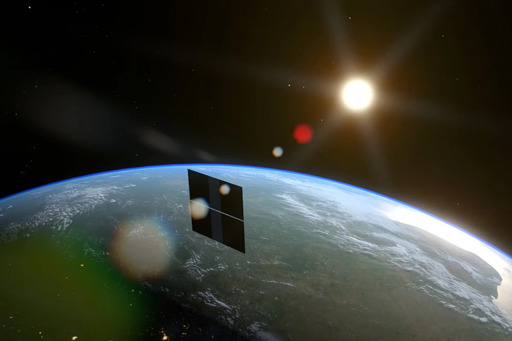
At minimum how would the heat be managed? Also as someone else said, just getting the material from the earth into orbit is currently possible but why?
An average PC with 8GB of RAM will have around 4 bit-flips per year because of cosmic rays. When you remove the wonderful protective atmosphere that number is so greatly increased that they have to use older chips, encased in a shield for any computer system that is launched into space. Explain to me how you are supposed to have stability with 100 000 5nm process chips constantly be hit by cosmic rays? The answer is a shitload of lead or steel or concrete. It is fucking unrealistic to send that much shielding material into orbit. Option B is getting the equivalent compute with 50nm process space hardened chips into orbit, which is also unrealistic because of the shear amount of chips required to have a useful data center.
Anyone who immediately does not shut down the idea of orbital data centers should not be in the field of tech, and especially should not be the Csuite of a tech company. I can’t belive anyone even humors the idea, it’s a fucking joke.
Making everything run ontop of an LLM was not non deterministic enough. Now with the power of cosmic rays we can guarantee the most non deterministic system possible. With such an unknown state we may finally achieve garbage in sometimes not garbage out compute. Invest in typewriters and monkeys today and you could be a partial owner of the entire works of Shakespeare soon™.
Finally, a true RNG!
I’ve refined your idea into just launching a Magic 8-Ball into LEO and call it an orbiting data centre. I’m estimating my IPO at nine hundred quintillion dollars.
The linked video by Real Engineering does some back of the napkin math and yeah… the numbers are so off anything remotely feasible, it’s hilarious.
Dumping heat is a real pain in space because you can’t use convection. Everything has to use big radiators and cool off radiatively. Then when it is exposed to the sun it will be hit by the full force of the sun’s heat, then when it is in the earth’s shadow it will rapidly cool.
They are in a sun synchronous orbit and the radiators will be positioned for the least contact while the solar panels will be the most.
A big radiator. Yes they know how to do it, they already do it at a smaller scale with starlink. No its not as big as people seem to think (but it is big). The solar panels are bigger at least 2-3x, maybe more.
Also the mass to orbit / size for this does not work without starship working.
Apparently for an average data center youd need bewtwen 100,000 to 500,000 meters squared of radiator area
These dishes only need a radiator < 2 times the size of the ISS radiators if they were using the radiators on the ISS. They’re only 125kw avg, 150kw peak and the ISS radiators are rated 84kw.
I’m sure there’s been advancements in radiating heat efficiently in space as well.
Cumulatively it’ll be a lot, but the solar panels will be even more. They’re way bigger than the radiators.
A dara center is more than 100Kw.
You’re right, its going to be 10s of thousands of these smaller 125kW avg dishes, but they only need to solve the problem at the scale of 150kw peak.
We can’t fit tens of thousands of massive radiators floating around up there. The ISS has 27.2 meters / 88 feet of ammonia filled radiators that is able to expend… 56kW of heat.
Your 125 average is 2 and quarter times more that the ISS loop meaning we would need to launch up with each shitty satellite an additional 73 meters / 235 feet of trusses, support beams, gold and copper paneling and ammonia filled loops for each individual satellite.
Oh right and you want tens of thousands so at a reasonable 20,000 of those we need 1,500KM of radiators alone which is the radius of the fucking moon.
No, it won’t be that, cause its just as dumb and unfeasible.
The ISS is rated for 84kw and runs substantially cooler, they wont actually be that big. They will be smaller than the ISS whatever they end up being.
The temperature of the radiators scale to the 4th power.
It was more of a, it this is the worst case limit.