I literally laughed out loud reading the headline. Good shit, hopefully the Find Out season will carry on at this kinda pace. Probably won’t, but it’d be nice to see.
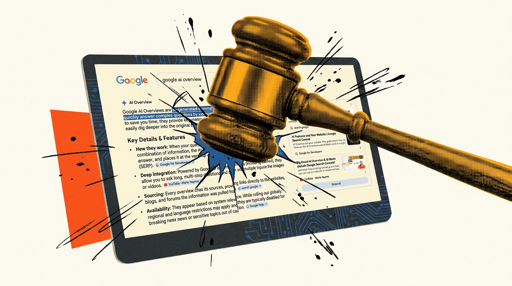
A German regional court has ruled that Google is directly liable for false claims in its AI-generated search overviews.
Unfortunately, the regional court is the lowest court stage. This will climb up until highest German court and after this to the EU court, I expect to see.
Being then a „Grundsatzurteil“ that is leading all courts in Germany. Our legal system isn’t case driven.
Unfortunately, the regional court is the lowest court stage
No. Landgericht is the second stage already.
It’s Germany, they’ll just find a way to blame Brussels and throw more money at the US as an apology.
A regular search engine just points to outside websites. But AI overviews generate “independent, new, and substantive statements” by evaluating and combining content from various third-party sites. And only Google can check those statements, the court said, “at least by comparing the underlying third-party websites with its own statements based on them.”
Honestly this is all the reasoning you need to infer that Google should be liable. Google alone has editorial control over the summary their AI generates, not the outside sources used to generate these statements, ergo Google should be held liable for that.
At the hearing, Google argued that users could check the linked sources themselves to verify whether the AI summary was correct. Users generally knew “that information generated with AI should not be blindly trusted,” the company claimed.
… And you know that’s true when the best Google could muster as a defence is to say that people shouldn’t be blindly trusting the AI, which ironically means even Google thinks their AI is full of shit.
But unfortunately for Google, not only does the court not buy that defence, but it would appear that’s contrary to how most people use the feature.
The ruling may also have international reach, according to the court.
I seriously hope so. Its about time companies started taking proper liability for the actions of their LLMs.
And if Google complains that it’s on the pieces of info they got from 3th parties that were wrong and name them, then the 3th parties are able to request compensation for using that info.
I don’t use Google, but DuckDuckGo Search Assist often shows summaries with links that don’t at all support what the summary says, but I often still forget to fact check it. I might start using the no AI version of the site because I’m concerned I might accidentally register something important as factual at some point that isn’t.
Excellent. Make platforms with algorithmic feeds count as publishers, too, and you can solve 90% of the world’s problems
What do you mean by “algorithmic”? Something like a recommendation engine?
Basically anything where the platform prioritises some things over others, rather than just giving you the posts/videos/whatever in order from the people you’ve subscribed to. Recommendation engines would be one example
To add, what happens is it prioritizes engagement (comments the most, then likes, then dislikes). The problem with that is this ends up prioritizing ragebait, preaching to the choir, disinformation, etc. since that is how you get engagement.
Well, technically, that’s not correct. Even showing everything in order is an algorithm, but for some reason people don’t the word to mean that. So thanks for clarifying.
All they need to do is use the exact text from the answers and attribute them to the source…