I disagree with this, because your score is more impacted over time by reliably paying your bills as agreed upon than by how much money you’re making for lenders. Someone who carries a balance month-to-month on a credit card (paying let’s say $75 interest) and someone who pays their balance in entirety each month (paying $0 interest) will both have the same positive impact to their credit score. This is a measure of reliability and not profitability.
There are other factors though, like the balance on the card when the bill is issued (higher than usual can knock your score a couple points), how old your accounts are (older is better), and how much credit you have available to you (more available credit is better, even if you never use it)


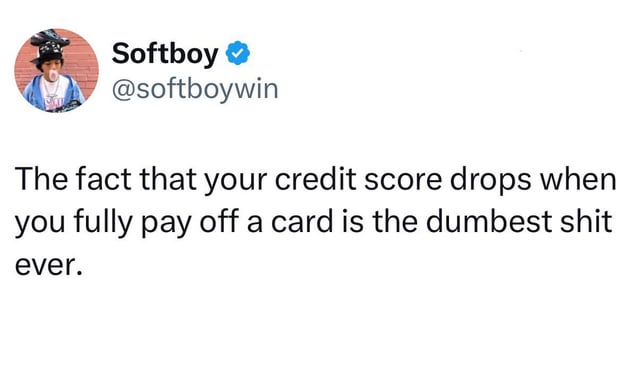
I disagree with this, because your score is more impacted over time by reliably paying your bills as agreed upon than by how much money you’re making for lenders. Someone who carries a balance month-to-month on a credit card (paying let’s say $75 interest) and someone who pays their balance in entirety each month (paying $0 interest) will both have the same positive impact to their credit score. This is a measure of reliability and not profitability.
There are other factors though, like the balance on the card when the bill is issued (higher than usual can knock your score a couple points), how old your accounts are (older is better), and how much credit you have available to you (more available credit is better, even if you never use it)