Portugal hit 80% renewable electricity in January, saving €703 million on bills, securing the grid and spurring green projects—benefiting residents nationwide.
They are expensive if you don’t build the grid to transfer the power to where it is needed. Then if some part of the country has a lot more than the other part you get to stop the renewables in one part and run Gas and Coal Power in the other to make up for. So younger to pay it twice.
You know, exactly how the CXU fucked it up in Germany.
It is not like grid is free. Grid costs a lot. Cables cost a lot. Transformers cost a lot. Transferring power incur in loss. Furthermore, if it is windy in Denmark, probably is windy also in Germany. While grid connections are indeed important, diversification of energy sources and storage are even better.
In 2024 not it did cost 554 Mio€ for powering down solar and wind, while they were usable.
Meanwhile in Bavaria the CSU is sabotaging the creation oft Wind power for example. In 2023 they stated they want to build 1000 new wind power plants. In 3 years they managed 30. In BW, which is half as big, it was 2024 27. That same year 154 plants went online in NRW.
Yeah, we need a better grid. But it would help if more renewable sources would be build every where. That would also reduce the cost.
renewables are cheap, solar don’t work at night. Portugal has 37% hydro, 35% wind, 4% solar. Not all the countries have access to that much wind and hydro capacity. Italy is a stark example of a country with zero wind potential in the most industrialized areas (the padana plain). Having a big hydro potential is also great as hydropower is dispatchable. That means you do not need to build batteries to address the instability of renewable like wind. Renewable is great, but is not the universal solution. Each country and each grid need to work with what is given by nature to optimize the best for the use-case and level of consumption. Not all countries are lucky as Norway, Denmark, Ireland or Portugal. Italy is great for solar, but you said it yourself: solar do not work at night. So you either need nuclear or tons of batteries to decarbonize the grid.
There is nothing wrong with solar + batteries, because battery prices (like solar) have been falling massively in the last few years. So solar + enough battery capacity is still dramatically cheaper that fossil fuels. Just look at what South Australian has been doing in the last few years.


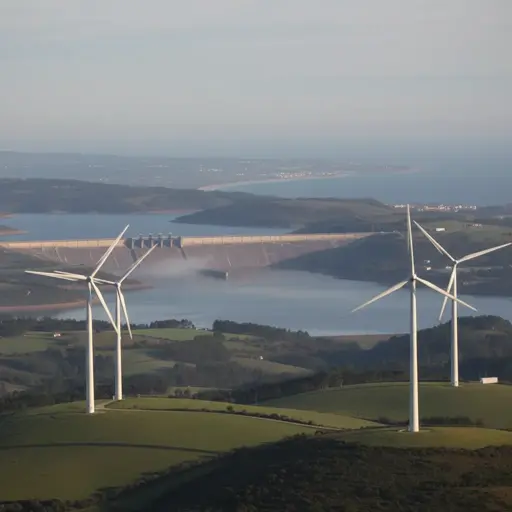
B-b-but they told me renewables are expensive and don’t work at night!
They are expensive if you don’t build the grid to transfer the power to where it is needed. Then if some part of the country has a lot more than the other part you get to stop the renewables in one part and run Gas and Coal Power in the other to make up for. So younger to pay it twice.
You know, exactly how the CXU fucked it up in Germany.
It is not like grid is free. Grid costs a lot. Cables cost a lot. Transformers cost a lot. Transferring power incur in loss. Furthermore, if it is windy in Denmark, probably is windy also in Germany. While grid connections are indeed important, diversification of energy sources and storage are even better.
In 2024 not it did cost 554 Mio€ for powering down solar and wind, while they were usable.
Meanwhile in Bavaria the CSU is sabotaging the creation oft Wind power for example. In 2023 they stated they want to build 1000 new wind power plants. In 3 years they managed 30. In BW, which is half as big, it was 2024 27. That same year 154 plants went online in NRW.
Yeah, we need a better grid. But it would help if more renewable sources would be build every where. That would also reduce the cost.
renewables are cheap, solar don’t work at night. Portugal has 37% hydro, 35% wind, 4% solar. Not all the countries have access to that much wind and hydro capacity. Italy is a stark example of a country with zero wind potential in the most industrialized areas (the padana plain). Having a big hydro potential is also great as hydropower is dispatchable. That means you do not need to build batteries to address the instability of renewable like wind. Renewable is great, but is not the universal solution. Each country and each grid need to work with what is given by nature to optimize the best for the use-case and level of consumption. Not all countries are lucky as Norway, Denmark, Ireland or Portugal. Italy is great for solar, but you said it yourself: solar do not work at night. So you either need nuclear or tons of batteries to decarbonize the grid.
There is nothing wrong with solar + batteries, because battery prices (like solar) have been falling massively in the last few years. So solar + enough battery capacity is still dramatically cheaper that fossil fuels. Just look at what South Australian has been doing in the last few years.