

122·
17 days agoIt’ll be interesting to see if we can find more than a correlation. This ought to be a polymarket bet… But mine would be on either ultra processed foods or microplastics.
It’ll be interesting to see if we can find more than a correlation. This ought to be a polymarket bet… But mine would be on either ultra processed foods or microplastics.

Ship be happen’ now
I just watched his newest video and Sal’s doing it daily right now. Not much new in broad substance, but details are developing.
I went back and looked twz reported 770 missiles expended over the 9 months of their Hohthi protection. This is all missiles, so it’s unclear how much of this was offensive vs defensive, but:
Many of these weapons were used in direct defensive actions to protect commercial shipping and U.S. Navy and allied warships operating in and around the Red Sea and Gulf of Aden. While there is no price on human life and even a drone packed with explosives could severely damage an American destroyer, putting it out of action for months and possibly injuring or killing members of its crew, it’s interesting to put a price tag on what these weapons might have cost. This is becoming an increasingly important issue as the U.S. evaluates its own stockpiles and what would be needed to sustain a conflict in the Pacific against a foe exponentially more powerful than the Houthis.
Without knowing the exact breakdown of the missiles and other munitions employed during the IKECSG’s recent deployment, it is impossible to put a dollar figure on all of the weapons expended. The unit price of a single Block V Tomahawk is $1.89 million or so, so launching 135 of those missiles would have cost the Navy $255,150,000.
So stockpiles, resupply, and production becomes a big issue, beyond the astronomical cost of this.
(All for the fucking ego of a Cheeto.)
Sal’s What’s going on with Shipping? Channel did a video that adds to your points, while covering other things that happened in between too.
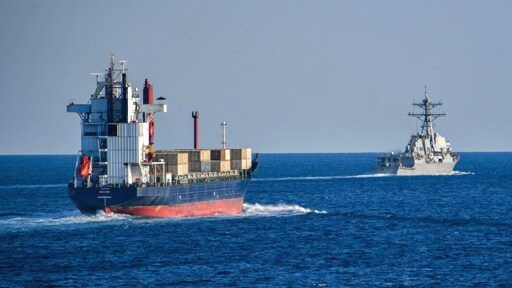
We don’t have the destroyers to so this, let alone the stocks to keep them full. Last time we tried something similar with the Houthi when we stood off and bring them down along the Red Sea we ran out.
The best we might be able to do is the 5 or so US flagged vessels. Apparently France is going to do the same for their vessels. All the rest of them are probably just going to wait for the War insurance to get sorted and then start running it again (like some of them are apparently).
This is the author’s post at Oxford: https://www.rsc.ox.ac.uk/news/global-poverty-trends-through-a-new-lens-olivier-sterck-article-for-voxdev