Repair goes mega mainstream with the launch of Lenovo’s new T-series business laptops, which earned our highest honor with a 10/10 repairability score.
Ripper job on Lenovo’s part; I’d give them flack for using LPCAMM2 instead of SODIMM but honestly, it is ultimately the better choice for laptops and it’s totally cool to see it instead of soldered RAM.
Ideally they’d bring back the old keyboard layout based on the T25, but that’s more or less nitpicking at this point. The Powerbridge battery system would be cool to see make a comeback and a swappable WIFI module would be cool (they kinda brush is off in the article but I think replacing and upgrading the WIFI module would be a nice thing).
My personal problem are the speakers; although ever since getting my hands on an M1 Pro MacBook I’m kinda spoiled in that regard.
Because it’s a new-ish standard that few manufacturers use (I’m only aware of Dell and Lenovo using it) and thus, it could be harder and more expensive to replace them than normal DDR5 sticks (although those are expensive right now as well so eh).
But ultimately, they offer more benefits than drawbacks.
Yeah, but at the same time, it has WAY better performance than traditional SODIMMs. The primary technical reason laptops had RAM soldered for so long was because the transfer speed became problematic with that physical format under DDR5. LPCAMM2 removes that bandwidth constraint, and maintains user serviceability.
Seems like the AMD models are always more of an afterthought to lenovo; when I bought my P14s Gen 5 the AMD version still was based on an older chassis design compared to the all new intel design
I was wondering what they meant when talking about the WiFi chip. Is it replaceable but just annoying to get to or is it soldered to the board? I thought typically WiFi chips tended to be one of the few replaceable parts.

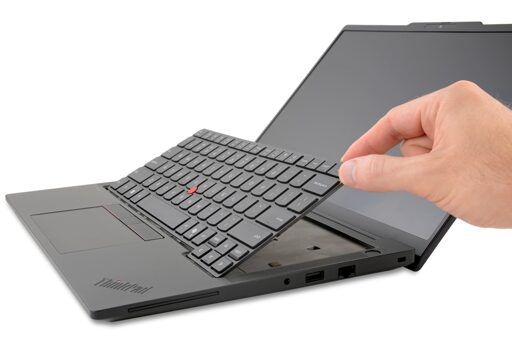
Ripper job on Lenovo’s part; I’d give them flack for using LPCAMM2 instead of SODIMM but honestly, it is ultimately the better choice for laptops and it’s totally cool to see it instead of soldered RAM.
Ideally they’d bring back the old keyboard layout based on the T25, but that’s more or less nitpicking at this point. The Powerbridge battery system would be cool to see make a comeback and a swappable WIFI module would be cool (they kinda brush is off in the article but I think replacing and upgrading the WIFI module would be a nice thing).
My personal problem are the speakers; although ever since getting my hands on an M1 Pro MacBook I’m kinda spoiled in that regard.
Why would you do that?
Because it’s a new-ish standard that few manufacturers use (I’m only aware of Dell and Lenovo using it) and thus, it could be harder and more expensive to replace them than normal DDR5 sticks (although those are expensive right now as well so eh).
But ultimately, they offer more benefits than drawbacks.
Yeah, but at the same time, it has WAY better performance than traditional SODIMMs. The primary technical reason laptops had RAM soldered for so long was because the transfer speed became problematic with that physical format under DDR5. LPCAMM2 removes that bandwidth constraint, and maintains user serviceability.
Profits.
Technical != financial
It looks like the AMD model still comes with SO-DIMM. Was hoping for AMD + LPCAMM2 + repairability, but I guess you can’t have everything yet.
Seems like the AMD models are always more of an afterthought to lenovo; when I bought my P14s Gen 5 the AMD version still was based on an older chassis design compared to the all new intel design
I was wondering what they meant when talking about the WiFi chip. Is it replaceable but just annoying to get to or is it soldered to the board? I thought typically WiFi chips tended to be one of the few replaceable parts.
It is soldered to the board