Lenovo also owns the Motorola phone brand, and they’re going to adopt/allow GrapheneOS. I think they know how to grab customers right now, and I honestly like it.
They’re usually also well supported on Linux, and even sell them with Ubuntu and Fedora pre-installed. Generally not a terrible brand.
Is that a good idea for a non tech person* with no Linux experience who absolutely needs to send documents successfully to others the first time without delay or should I just wait until my degree is finished and I am less dependent on document interoperability and have fewer absolute deadlines?
- My level of technical knowledge is here: if a program or usb device isn’t functioning, I know to check the driver, but I always have to look up what the device manager is called. On the other hand, I am capable of looking things up and following simple instructions, which has to count for something.
You’re as prepared as anyone ever is. Getting good with a search engine is the best preparation.
Also, if that fails? Most distros have a forum where you can ask for help and actually get it.
Document interoperability? LibreOffice works well, and you can save in all the same formats as MS Office and more.
The learning curve is mostly what the new tools and programs are called. But so much stuff actually works better over there in Linux land - VLC, Krita, Blender, Audacity, much more.
Try things in a Virtual Machine! If you really can’t give up some of your windows tools, you can try dual-booting, but Windows Update doesn’t always play nice with another OS on the machine.
Also, don’t forget creating a bootable USB stick with the distros you think you’d like. Rufus or balena etcher should get you there, just figure out what distros you think you’d like to try out, as sometimes it can be easier to set those up than create a vm, plus you might be able to notice any obvious issues running natively.
I’m my family’s “computer guy” despite not being overly tech savvy, and I always tell them it’s just cause I can use google. Being good at something is literally just a matter of how quickly can you pick up on how something is done, and how well can you retain that for the future through whatever means work for you.
Depends. If you use Google docs or the browser version of Office 365 (or whatever it’s called now) you’ll be fine. If you want to use an offline document editor, you’ll need to be technical enough to understand the difference between file formats like doc, odf and pdf.
If you receive a doc file, edit it in LibreOffice and send it back, the recipient might complain that the layout has shifted slightly.
If you need to be absolutely sure the recipient gets the document layed out exactly as you created it and they don’t need to edit it, exporting to pdf is a good option.
If you need to send or receive Excel/spreadsheet files you might have a bad time, I think. Though interoperability there may have improved since the last time I tried that sort of thing.
Before switching to Linux, download the Windows/Mac version of LibreOffice or OnlyOffice and see if it suits your needs. If not, it should be possible to run Office 365 on Linux using Wine or Winboat. However, Wine might not work or require too much tinkering for the average noob. Winboat should be more foolproof, but will increase the startup time of the application because you’re running it inside a Windows VM.
It depends. If you get a Laptop that is specifically compatible with Linux (like a Lenovo) and use a “noobie Distro” (like I do (Linux Mint or Fedora, whichever looks nicer to you)) then you’re fine
If you use a Laptop which is not compatible, you’re going to have a very bad time
You can try out most Linux software immediately on Windows, so you know what you’re in for. LibreOffice and GIMP work in Windows, but that isn’t really true the other way around with Office and Photoshop. Your mileage may vary when it comes to tolerating these alternatives.
Your technical knowledge as described is unironically far beyond the average user so I’d say you’re probably good. Depends on what you want to do though. You can occasionally have problems if you need to do something specific or are married to software that doesn’t exist on Linux. Word processing is down pat. You won’t have the app version of Microsoft Office, but there are open source alternatives like LibreOffice that are compatible with Office file types. For formatting, you may have to download some Microsoft owned fonts since they’re technically proprietary and not bundled with Linux/your office suite. In browser, Microsoft 365 and Google Docs works no differently than normal.
As someone else mentioned, you can test almost any distro on a live USB. There is also this site where you can remote in and test the general look and feel for free. You won’t have an internet connection though:
Installing something like Linux Mint or Ubuntu is fairly easy. The hardest part is probably creating the install media and that’s not particularly hard ei her.
If you don’t rely on specific software (like Adobe), using Linux is a good idea. I’d still advice not to mess with a computer you rely on and wait until you have sufficient time to troubleshoot something. Even if nothing goes wrong a new OS can still take a little getting used to.
who absolutely needs to send documents successfully to others
While the problem is Micro$lop intentionally not following their own document standard, i’d say wait until you finish your degree.
Generally speaking though, unless you ave very specific needs, you’ll most likely do fine with linux. You can try a liveUSB version: boot it of off a USB drive, test it, without installing (it’ll be slower though).Not gonna lie, Linux is a pretty big learning curve, but it’s worth it to get away from Apple and (especially) Microslop Winblows. It’s the only OS that respects the user.
IMO switching to Linux as a new user is no harder than switching from Windows to Mac, which I think is something more people can identify with and aren’t afraid of, for the most part.
Couldn’t disagree more. Having to learn how to use the command line to complete basic tasks is a huge learning curve.
what basic task have you run into that requires the command line? have you tried Mint? my 83 year old dad has been on mint for over a year with no complaints, and I don’t think he even knows how to open the terminal . . .
I’m just not interested in rehashing this conversation. Anyone who has used Linux already knows, even if they won’t admit it. Being dishonest about it isn’t helping anyone. I used Windows for 30 years and never touched any kind of CLI in that time. I did use it on MacOS but only for Homebrew because there’s no other GUI alternative.
i think it heavily depends on the person’s use case. if someone is doing web browsing and maybe making a couple word documents, the learning curve is negligible. also, you dont need to use BASH to do most things, it’s 2026. most anything you can think of, you can do via GUI.
It doesn’t matter what the usecase is if the Wifi or speakers or camera don’t work. Or if all the icons and text are so small as to be nearly impossible to read.
Couldn’t disagree more. Having to learn how to use a Mac is a huge learning curve.
Lol what I was using Linux when I was a kid. Other than learning how to use terminal commands and a package manager occasionally it’s hardly any different from other OSs
your level of technical knowledge is so far beyond the average person’s that it’s insane. the idea of ‘my computer has a problem, i’m going to google what the popup says’ simply does not occur to so, so many people.
also- you can definitely make and send documents with linux, no problem. more popular distros (ubuntu, mint, fedora (which i recommend, but im biased)) are as intuitive and point-and-click for surface level use as Windows is, and most come pre-installed with an office suite.
I think you’ll be OK but there will be a slightly learning curve since it is a different OS. As for documents make sure they work well with either LibreOffice or OnlyOffice, which should be available on other OSes. There are also always online office suites if needed.
If you have a spare flash drive, you can also test out Linux distros (flavors) before installing them in a live mode, like a demo.
Best of luck.
You’re exactly at the perfect level to start getting your feet wet without losing productive time (as long as you don’t go on a distro-hop frenzy 🤣).
Weirdly enough, you’re way ahead of 99% of the tech-using population worldwide.
Try with a VM first, or install on an external drive and boot from USB.
I got a Mac at work and I struggled for a long time to do many basic things. Any change can be a challenge and there’s a learning curve. Same moving to Linux
You should be fine if it’s just messing with the usual document types but my understanding is universities use a lot of proprietary bullshit for homework and stuff these days that probably doesn’t play well with Linux. I would try setting up a virtual machine or a old PC if you have one first to dip your toes in the water
If your computer has 4+ cores/threads and 8GB or more of ram, I’d set up a virtual machine to test it out.
Linux itself works just fine for anything, but it’s different. There’s a learning curve and you might find that the thing you need to do immediately has a different process than what you’re used to, or needs some setting up first. There’s also always formatting differences between word and libreoffice writer (same can be said for different versions of word), and some higher level excel things that aren’t easy or not possible in calc.
If you know what a driver and device manager is and know how to Google search you are already leagues ahead of most ordinary people, especially with AI now getting answers is even easier, if your use case is simple student stuff and sending documents, Linux is gonna be very comfortable for that, the only concern is a minor chance of driver issues for something like biometric sensor or graphics cards on laptops, for that you can look up which distro and driver combo works for your specific hardware, but in my experience these days by and large most Linux distro just work out of the box with mordern hardware, you can test one out before installing with a live USB and if you want the most amount of compatibility but a laptop that comes pre installed with Linux or has the option of Linux provided by the manufacturer as that guarantees the hardware plays nice at least with the distro the manufacturer supports
Didn’t they have some huge controversy for having spyware pre-installed or something like that a few years ago? Doesn’t take away from the direction they’re moving in now, though! Hopefully they continue to move in this more pro-consumer direction.
Yeah the Superfish incident. AFAIK they haven’t done anything sketchy since then and if you’re the type to just wipe everything and install your own distro anyway it shouldn’t really affect anything but still not a great look.
Ubuntu? Yeah. It’s pretty much the only distro I will recommend against using (the Ubuntu spins are usually fine though). They offer Fedora as well though. And it’s still way better than Winblows.
I presume you are referring to the SuperFish scandal in 2015.
They were also the first OEM to support steam deck on their handheld (beside Valve).
Isnt lenovo the company that used to make the rugged military laptops that actually had Chinese or foreign backdoors installed?
Edit: for those interested https://www.investigativeeconomics.org/p/government-still-buying-lenovo-laptops
Edit 2 from a quick search. Lenovo laptops have faced allegations of containing backdoor vulnerabilities that could allow unauthorized access to data, particularly concerning military use. These concerns have led to bans on Lenovo products by various intelligence agencies due to potential cybersecurity risks.
 securityaffairs.com Wikipedia
Lenovo Laptops and Backdoor Concerns
Background on Lenovo’s Security Issues
Lenovo, a Chinese technology company, has faced multiple allegations regarding security vulnerabilities in its laptops. These concerns primarily revolve around potential backdoors that could allow unauthorized access to sensitive data.
Notable Incidents
Year Incident Description 2008 U.S. military investigators reported finding backdoored chips in Lenovo motherboards, which allegedly logged keystrokes and transmitted data.
2013Intelligence agencies in the U.S., UK, and Australia banned Lenovo PCs due to backdoor vulnerabilities discovered during testing.
2015The Federal Trade Commission (FTC) charged Lenovo for pre-installing adware that created security vulnerabilities, leading to a settlement.
2016The Pentagon warned that Lenovo computers could introduce compromised hardware into the Defense Department.
That’s fucking depressing and SO ironic…
So in order to get more spying machines onto US IT networks, their honey pot is “build a product that is pro consumer”, and it will sell like hotcakes in the IT community.
What a fucking timeline
The shitty aspect is their actually not bad hardware. They last forever and seem to be held in high regards in the tech community but it’s as if people forgot a decade later than their still owned by Chinese. Still banned for security reasons for military use even currently after 20 years. Now the military still supplies them just not for mission critical purposes but for personal devices not govt use.
Wild. Every tech person at some point shills for Lenovo and they do have great things. Just screams Trojan horse to me still. IMO
It’s Lenovo reading the room (well, which is unusual), rather than worrying about the consumer.
It’s still a big corpo and line must go up.
Nice to see this is turning out to be a net positive though.Motorola has been kinda crap for years now, not supporting their android phones with updates, etc.
Hopefully this is a new leaf for them.
Isn’t Lenovo that dodgy company that did the China stuff though? Hopefully they’ve been bought by someone else since then.
Just a lil nitpick: article is by iFixit who is a Lenovo business partner. So perhaps less objective than one might hope.
It seems to me that Lenovo’s repairably is more affected by that iFixit partnership than the opposite. I don’t see anything factually wrong or suspicious in the article.
Nevertheless, a conflict of interests is possible.
I agree, but like others have said, it bodes well that they’re open about this in the article
I use iFixit’s guides all the time, so I would hope that their score isn’t affected by it. I’ve seen them as being fairly good at their role.
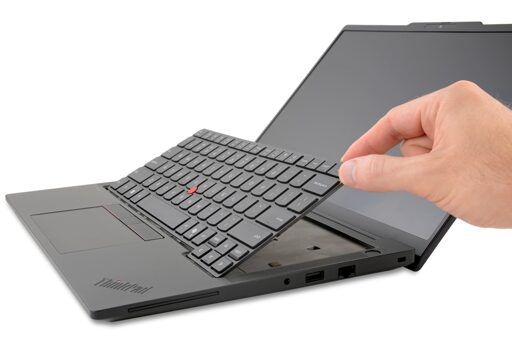
As someone who has changed a laptop keyboard before.
That picture says it all.
Picture’s worth a thousand expletives.
They even state it them selves in the article, so it is not like they are trying to hide this. Also they say that this is not the end all be all of reparability, which IMO should merit not then getting a 10/10 but idk what their metrics are.
This is true, but they’re also not wrong that fully-modular USB-C ports is an absolutely huge win. It’s one of the biggest things when it comes to laptops these days.
That was where I went “holy hell”. Wearing out ports is something I am constantly quite scared of when plugging things in. Especially things like cables when they want to twist vertically, but the port is horizontal, and, well, it’s a thick cable, so…
It’s unlikely that fact will change the repairability of the devices. They risk too much by posting biased and false information on that end.
There’s a difference between ‘repairable’ and ‘upgradable.’ Most of the comments seem to conflate the two. Lenovo isn’t doing a Framework.
It’s a smart move. Differentiates them from other laptop-makers for corporate IT, who can do the parts swaps themselves. Also smart is associating the brand with iFixit and working to get a 10/10. That’ll be what sets them apart from all the others, at least for the next year or two.
The “upgradability” part in a small laptop is questionable to me, anyway.
The GPU is really compromised in that chassis, as having it in a slot compromises cooling big time, and limits how much power it can use. And while I love upgradable RAM for the CPU… it’d be better if they used faster CAMM modules. Many other brands have upgradable SSDs/WiFi.
Swappable ports are awesome, no question.
…But honestly, I’d rather have a smaller chassis, bigger GPU and better cooling right off the bat, like a Zephyrus chassis. And have it reparable, and make the whole motherboard standardized/swappable, but not compromise the chassis so severely by making it modular.
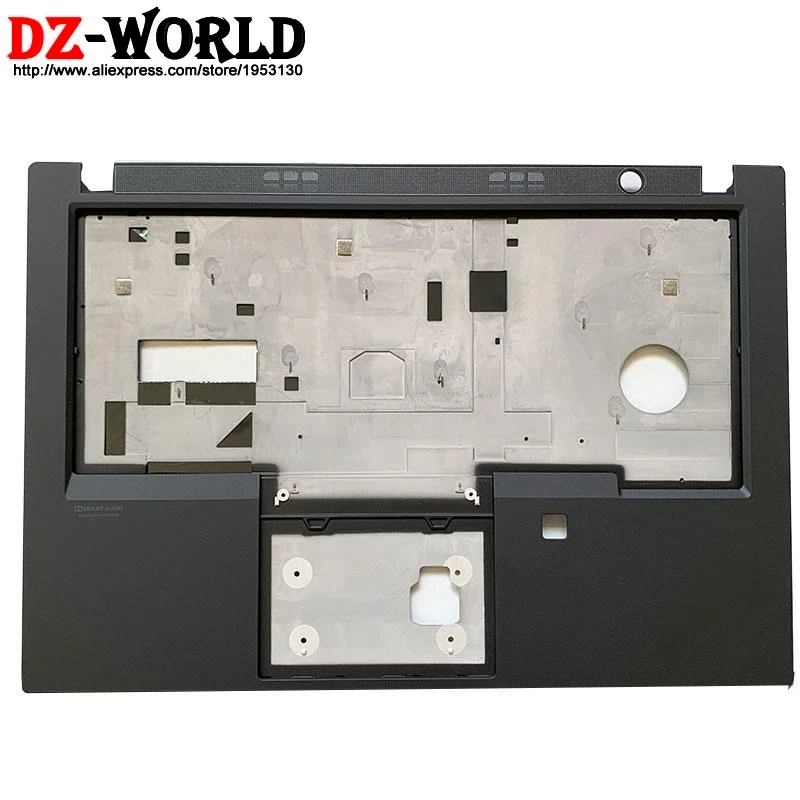
A think pad t series is not really much harder to take apart than a framework. Just more screws and fewer magnets. The screen is probably an exception however.
That’s his point. It’s similar to framework, but not the same.
Easy repairability is great, truly.
But framework offers more than that, easy repairability AND upgradability, because they offer new upgraded parts with the same compatibility as the old ones, so you can just drop them in.
Lenovo is not yet doing that. Which is fine. Just a noteworthy difference.
I would be curious to see how often people actually upgrade their frameworks.
I agree with their repair stance. It just feels like one of those things people will tell you they want and then never do.
Still maybe the explosion in memory prices will change the incentives and people will start holding things longer. It will be interesting to see.
I would be curious to see how often people actually upgrade their frameworks.
For me, I’ve upgraded my mainboard to a newer CPU generation for better integrated graphics (old one is in a case as a home server) and I upgraded to their matte screen when they released those.
I got my framework about a year ago, before the tariffs got crazy, and well before ram got crazy (I put 96 gigs in it to play with AI workloads, and for the lulz).
My plan is to ride this thing until it starts showing its age. Which I imagine will be another 3 or 4 years? Only then can I comment on my actual desire and commitment to upgrading it.
Until then, I’m just banking on the fact that the company will a) live. And b) still have parts for my machine.
I do appreciate what they’re doing, and I like my machine now.
There are definitely people out there who upgrade super frequently, who knows, maybe I’ll be one of them in 1 or 2 years instead of 3 or 4. Hard to say what life will look like then, the way things go these days.
It is a bigger deal in business settings, where one laptop can see multiple hands and you’ve got a team dedicated to repair.
Not typically an issue for the individual user, but increasingly an issue for a team of users as the size of the team grows
I’ve upgraded my 13 with new mainboards twice. I’ve yet to upgrade my 16 because everything is too expensive now, and upgrading the GPU to the newer nVidia module would require replacing the screen too and fuuuuuck that. Maybe they’ll put out a new AMD module that won’t require replacing a perfectly good screen.
While easy to repair, how does durability compare so you don’t need to repair it in the first place?
While not bad like an HP consumer grade laptop, I have not heard good things about the rigidity of the frameworks. All the modularity takes away space for reinforcement and leaves more points for things to break.
The modularity might be considered almost a gimmick of recessed USB-C accessories, so I would personally be happy with a device that leaves that outside the core chassis, so long as the chassis ports are at least as modular as this ThinkPad concept. No idea if those big empty areas are a serious liability structurally or not…
Even among shitty laptops, it’s always been keyboard, screen, or charging port as the things that break, not sure structural support matters too much on those fronts. I have had boards fail, but not due to physical events.
keyboard, screen, or charging port as the things that break
That’s exactly where structural reinforcement makes a difference. Keyboard less so since usually it’s the switches that break. But ThinkPads have reinforcement not just on the chassis, but the ports too. There’s a plate about 1 inch wide on all the ports of my machine. The less all components flex the less likely things break. From simple insertion cycles to actual physical damage, it all adds up over time.
Ok, my ports break out of use, have had pretty bad luck with USB-C charging ports on the thinkpads… Never been dropped but they just stop working… Then if out of warranty I start using another USB-c port… then that breaks…
Seeing a modular USB-c port is just absolutely fantastic…
There’s a difference between ‘repairable’ and ‘upgradable.’
Absolutely! I’ve got a Lenovo IdeaPad Flex 5 (laptop/tablet thingy).
I’ve upgraded/replaced the ssd - no problem.
Unfortunately, this laptop has an issue with the keyboard: the left section/panel intermittently stops sending inputs. Meaning, keys like escape, a, w, shift, l-control - just stop (even in the bios). I’d read that they keyboard “collects” static which causes problems with certain sections of the keyboard.
I thought I’d see how difficult it would be to replace the keyboard. I watched a teardown video, and of course you need to remove everything… but I lost it when, the person in the video used a heat gun to melt “plastic rivits” that connected the keyboard to the motherboard case. Then with the replacement keyboard needed to remelt the plastic rivits.
This laptop is not repairable. In fact, I swore I’d never buy another Lenovo again as a result. … but if their focus is on making them repairable (
and their recent partnership with GrapheneOSedit: oops, that’s Motorola and GrapheneOS) - I might be eating crow tonight.Note that ThinkPad and IdeaPad are practically different companies with how Lenovo acts.
Fully expect IdeaPads to continue to be shit. ThinkPad can do the most wondrous good stuff in the world and IdeaPad will stay garbage.
And yes, I went through the same exact maddeningly shitty keyboard replacement procedure. Never again IdeaPad, though ThinkPad has been fine.
Bonus points, ThinkPad brand never shipped Superfish, and most of the firmware security flaws have been IdeaPad side. It’s amazing how half-assed they are with that brand yet pretty competent with ThinkPad.
Thanks for the clarification. I had no idea that Lenovo was so fractured. … and I’ll definitely not be buying another IdeaPad.
oops, that’s Motorola
https://www.lenovo.com/us/en/d/motorola-smartphones/ Same company, actually, so you were basically right the first time!
Ooh yes baby! As an early Framework adopter who’s repaired it already a few times, including a solder job on the board, I am happy to see it. I am getting increasingly angsty about where Framework would go in the future as its VCs crank up the profit knob. Having the biggest real manufacturer in the world introduce an alternative is fantastic. With that said, it also depends on Lenovo actually making parts direct-for-purchase available at decent prices. Without that, repairability serves just as marketing wank.
E: Is that a magnesium body plate?
An advantage that Framework still has is their upgradeability.
Fact.
But to be honest, the strength of the body of the Framework is pretty weak. Drops and more pressure result in permanent bending. I’ve already replaced one bottom. So if one wants a physically durable machine that can be thrown around, upgradeability might be okay to give up.
Is that a magnesium body plate?
As is tradition for thinkpads.
I thought they went away from it for their latest gens.
No, they’ve always had some sort of magnesium reinforcement. Full blown roll cage? Yeah that went away around the T440 series. E or L series? They’ve always been cheaper. But there’s always been some magnesium reinforcement on the T series.
T460 https://i.ebayimg.com/images/g/jrMAAOSwOwdkVWl8/s-l1200.jpg
T480 https://m.media-amazon.com/images/I/31Oj9fSCo-L._AC_UF894,1000_QL80_.jpg
T14 Gen 1 https://ae01.alicdn.com/kf/S59cb725ffd0043ccacb3e731f8409715c.jpg
Gen 3 https://www.ifixit.com/Guide/Lenovo+ThinkPad+T14+Gen+3+Keyboard+Replacement/157530#s329289
Gen 5 https://i.ebayimg.com/images/g/dn8AAOSwqT9mg1T-/s-l400.jpg
Oh yeah. You’re right.
Full blown roll cage?
I miss those.
Oh my. It seems you’re right.
Its nice to see the return of the classics!
One thing to highlight: T-series Lenovo laptops are mainstream business products shipped at a huge scale.
This is not a small-scale experimental product for the tinkerers. This may define the biggest laptop segment if it works out well. It might be the first time in a while that something like this hits such a huge market.
wtf are you talking about? this isn’t “hitting the market”, this is staple of the thinkpads for ever.
These particular models are about to be released, hitting the market. With all renown Lenovo got for good long-term support, this is their most repairable product as of yet.
this is their most repairable product as of yet.
thinkpads were always repairable, that and durability is their number one attribute. you present it as if it were somehow new thing.
Even though they were considered repairable, they are now better than ever at that, and they require as little expense as possible to replace certain parts.
I don’t know what’s so hard about that. They had it good, they made it better.
there isn’t really anything revolutionary described in the article (maybe with an exception of these detachable ports).
i have no idea how much things got worse in the last few years, so it is possible they are fixing something they broken lately, but again, presenting it as something new, when it is in fact something that thinkpads were known for since the last ice age and is why people are using them, is just strange to me.
it is really on the level of “omg you guys, did you know that ferrari is doing really fast cars?”
They got scared by Framework sucess
Well, good…
Though reparability is a good part of it, another would be a concrete commitment that the form factor of various things will be consistent generation to generation, that Gen 8 boards will fit into a current laptop.
deleted by creator
Exactly, but it still won’t get them my money. I believe in rewarding companies who had the balls to listen to their customers first with my dollars. Framework will be my next laptop no matter what any other competitor comes out with.
They’re the only reason we’re seeing any company starting to u-turn and make modular/repairable laptops.
Framework will be my next laptop no matter what
Big tent Framework?
I was not aware of that stuff you linked, appreciate the sources and education. I read through them and damn… 😩 there’s always some wacko ruining shit for the rest of us.
I agree that DHH guy sounds like a bigoted nut, but the thing about the Hyprland community being toxic doesn’t sound any different to just about any other linux community. There’s always some douche wanting to sound superior to others on the forums and usually a lot of them.
Elitest mentality kills just about any community enjoyment for a broad spectrum of intrests. So to me that’s just background noise, the DHH thing though… you have a valid concern.
I don’t think there is any truly clean competition sadly we seem to live in a world of the lesser evils instead of the lesser goods. I’ll keep my eyes out and see if any better options come up, or if you have any recommends on companies to keep in mind.
Have you heard about Tuxedo computers?
European, iirc. Default Linux focus. Possibly repairability focused (an expectation, but I don’t recall).
That “big tent” argument sounds to me like one that leads you to have a ‘nazi bar’.
I suppose Framework will be the better laptop for individuals looking to buy a new laptop, but also business class laptops come with fancy enterprise things like on-site repairs. So I think large corporations, the main customers of new T series Thinkpads, will continue buying them just the same anyway.
I think the people benefitting the most here actually are going to be the people buying off-lease Thinkpads. Those of us who know a quality used laptop is better than a cheapo new one (like a Pavilion or Ideapad), but also don’t want to spring for a brand new laptop (in which case Framework would be the best option - they’d be great used too, but they’re not that common on the used market)
This is me. I’m casually looking at a used Think Pad for Linux purposes and like you say, I know a well looked after second hand business class T model is better than a brand new shittop
I kinda doubt Framework’s success, no matter how large by niche manufacturer standards, even reaches Lenovo’s sales on a bad day.
Good that they’re (apparently) changing though.yeah, my company recently switched away from dell to Framework laptops. a couple of my coworkers with the Framework laptops really like them. They like how sturdy they are. The magnesium alloy case doesn’t flex at all. Our dell laptops with plastic cases often get dented and bent so eastily, and cause various problems.
We also have a couple Lenovo laptops, and I haven’t heard of any issues. Generally, the plastic used for Lenovo’s cases are noticeably thicker and harder than dells’.
I definitely feel a sense of ease knowing that if anything goes wrong with our framework laptops, I will most likely be able to fix it.
That’s awesome, but what issues did they have with dell? They’re pretty easy to disassemble and repair if you don’t buy the cheap consumer shit, get latitudes. But I’m all for straying away for framework.
Our dell laptops with plastic cases often get dented and bent so eastily, and cause various problems.
My work’s Latitude barely flexes, apples to apples?
We’ve been buying the Vostro series and XPS series.
I know the Vostro series is low end, but I thought the XPS series would be higher quality, but they had cases that fllexed just as much as the lower end Vostro.
TBH, we have not been buying Latitudes because they did not have the specs we were looking for. If recall correctly, yeah, the Latitudes we did have stood up fairly well.
Lmao
That’s nice you can replace the charging port without reflowing the motherboard now.
deleted by creator
Nice to see this pop up as Apple announce their 5yr plan to flood the world’s landfills & scrap yards with 8gb fused ram Neo’s.
Hasn’t Apple been soldering everything to the motherboard for ages now?
Oh yeah…for well over a decade. If you’re REALLY lucky the proprietary form factor m.2 is user replaceable and not just sad bits soldered direct to the PCB. (Edit: I really really hate Autoassume, that’s supposed to be “SSD bits”… I’ll leave it as is because it’s funny)
My wife has a 2017 MacBook Air, at some point in the last few years it stopped getting system and security updates. She didn’t notice until she got a pop-up from Chrome saying that her OS is no longer supported. Completely ignored it until around October last year when some websites stopped working and gave an error indicating out of date certificates.
(There’s a lot in those last 3 sentences that is wildly troubling to me…)
Took me from October until mid-January to convince her to TRY Linux. So I went to buy her a new m.2…and paid an extra £20 on top of standard because of the proprietary form factor. Luckily I bought before the major price hikes…got a 256gb m(ac).2 for ~£90. Would have just backed up her files and wiped the original drive but she wanted to be able to switch back to her exact installation if she didn’t like Linux…and the new drive is double the capacity 👍Good grief what a stupid future we live in.
And “sad bits” makes perfect sense.
I’m glad i switched to mint on my laptop, I hope it only continues to improve. If only we could self-manufacture the hardware, too…
At this point I’m so fucking fed up with the industry gatekeeping users, colluding against us, outright ABANDONING us because the fucking AI firms “bought all of our manufacturing output”, I don’t think I would even mind that much if I have to sacrifice a closet, or a whole room of my house, to contain the much bulkier homebrewed DIY electronics.
If 64 gigs of RAM a couple friends manufactured in their garage had to take up the space of a refrigerator – not a mini-fridge, i mean a whole fucking full scale kitchen appliance, I WOULD RATHER MAKE ROOM THAN PAY THOSE FUCKING CORPO PARASITES EVER AGAIN.
I mean…yeah…I guess I could live with homebrew tech on a scale of 64gb of ram being the size of a full fridge…but where the fuck do I put it?! Between the my wife and I there’s barely enough space for us and just our stuff in the house we own…😒🖕 Fucking Big Corpo Tech is in bed with Big Housing to conspire against the space required for Big HomebrewTech to be a contender…
*as usual
Yes, but if you are running Windows on them, do they still inject Chinese state-sponsored malware into Windows on every boot from UEFI/BIOS storage?
They were caught doing this on several occasions, to the point where Lenovo products are forbidden across significant swaths of the U.S. government and military.
Err… were they? I remember vulnerabilities and a ban from SOME of the US gov agencies, but not clear if it was because of spying concerns or because they wanted a US supplier.
How this hasn’t killed all serious interest is beyond me.
Very few people, relatively speaking, have heard anything about this whatsoever. That’s how.
There’s this thing called uninstalling the factory OS and reinstalling with a clean image. If you go a step further you can even get rid of Windows altogether and install Linux.
How can you trust that there’s no rootkits being injected into your linux install?
How can you trust other laptop manufacturers aren’t doing the same if we’re going with unfounded assumptions?
Most Linux images offer checksums to verify integrity.
Track record and reputation
Lenovo does not have a reputation of placing root kits in their Linux installs so there you go.
Goldfish memories by most muggles and normies.
Plus the latest shiny and feature FOMO.
And then you have procurement who are told to get the most at the least cost, allowing state-owned companies to undercut most competition. Without clearly-specified guidelines that exclude dangerous tech, most rank-and-file salarymen will be told by Dilbert bosses to order the hardware or look for a different job.
How would you recommend someone shop for a laptop? Any good guides?
So, some of rakabis’ advice is pretty good. I’ll just say that if you’re wanting to get away from being locked into a computational ecosystem with an even worse support lifetime than windows devices, avoid buying a Mac. A 2018 MacBook stopped receiving 90% of updates in 2024.
Caveat that by saying that older MacBooks, i.e. pre Mac made chips, are usually pretty reasonably priced on the used market. If you’re willing to switch to Linux then there’s even really good support for the hardware, with basically every distro working on MacBooks with Intel chips out of the box. The only part of deploying Linux on my wife’s 2017 MB Air that was REALLY a headache was the webcam. There’s info on every step to get the drivers installed and everything working, it’s just not all in one place, and a little outdated.Don’t listen to what the other guy is saying, it’s all bullshit. His vocabulary betrays this wonabe haxxor with bad ideas about everything and weird choices, and his suggestions are the same.
If you have the money and want simplicity, reliability, and interoperability, go for a Mac. Just clench your sphincter and maximize the RAM; min. 32Gb ought to be minimally appropriate for a 7-8yr lifespan of basic duties. And FFS, go for what your current data uses up ×2.5 or 1Tb, whichever is larger (vital performance reasons in that). Don’t get the smallest storage unless third-party upgrade options exist like for the Mac Mini M4. And remember: all RAM and a lot of storage is integrated these days, which is why you should always max it out; there is no upgrade path except wholesale replacement of the machine. CPU is largely immaterial unless you are doing truly heavy lifting like video editing or AI, so that can often be the lowest choice.
If you want freedom and truly unconstrained system, some form of Linux/BSD on a Framework system is the way to go. Or if a desktop, hand-assemble it yourself.
If you are going to stick with Windows, go for a business-class Dell. Trust me, it’ll be almost as $$$$ painful as a Mac, but these little f**kers are built to last. At least you can upgrade the RAM and on-board storage, although I honestly recommend not going under 32Gb for anything other than basic tasks. It’ll be a lot more zippy with 32Gb even if you spend the first week tearing all the AI and built-in spyware out of Windows.
Running a business class Dell on Debian. Fantastic machine.
Source?
One example of many.
You must be new to tech to not remember this. Wasn’t all that long ago.
Not even remotely the same thing OP is claiming. It’s their own windows flavor version with auto start script. It’s bad but not that bad.
Read it again. It occurs even with a full system wipe and re-install from Microsoft-direct media, or even a full hard drive swap. It is wholly independent of what is on the hard drive, the only restriction being that it can only successfully run when injected into Windows.
Trust me bro *tm
My memory was fuzzy, but I think it wasn’t UEFI but apps/drivers, but j could be wrong
You are correct, however they were malicious in nature and loaded on every boot from the UEFI/BIOS. They required Windows and auto-terminated the install if they already existed.
They can’t be a 10, only framework gets a 10. Nothing compares.
Happy for them, I’m sure the 100 people that still can afford computers will appreciate it.
Thinkpads are usually acquired as enterprise retire their stock, 2 or 3 year old devices for a fraction of the new price.
Thinkpads are generally invredibly cheap due to scale. You can also refurbished last years model for under 400 usd.
Hey… people win the lotto all the time! So for brief moments throughout the day there’s probably 101-107 people in the world who can still afford one!
Lenovo not dropping the ball on their thinkpad reputation but improving it. Very impressive
Ripper job on Lenovo’s part; I’d give them flack for using LPCAMM2 instead of SODIMM but honestly, it is ultimately the better choice for laptops and it’s totally cool to see it instead of soldered RAM.
Ideally they’d bring back the old keyboard layout based on the T25, but that’s more or less nitpicking at this point. The Powerbridge battery system would be cool to see make a comeback and a swappable WIFI module would be cool (they kinda brush is off in the article but I think replacing and upgrading the WIFI module would be a nice thing).
My personal problem are the speakers; although ever since getting my hands on an M1 Pro MacBook I’m kinda spoiled in that regard.
I’d give them flack for using LPCAMM2
Why would you do that?
Because it’s a new-ish standard that few manufacturers use (I’m only aware of Dell and Lenovo using it) and thus, it could be harder and more expensive to replace them than normal DDR5 sticks (although those are expensive right now as well so eh).
But ultimately, they offer more benefits than drawbacks.
Yeah, but at the same time, it has WAY better performance than traditional SODIMMs. The primary technical reason laptops had RAM soldered for so long was because the transfer speed became problematic with that physical format under DDR5. LPCAMM2 removes that bandwidth constraint, and maintains user serviceability.
The primary technical reason laptops had RAM soldered for so long was because
Profits.
technical reason
Technical != financial
It looks like the AMD model still comes with SO-DIMM. Was hoping for AMD + LPCAMM2 + repairability, but I guess you can’t have everything yet.
Seems like the AMD models are always more of an afterthought to lenovo; when I bought my P14s Gen 5 the AMD version still was based on an older chassis design compared to the all new intel design
I was wondering what they meant when talking about the WiFi chip. Is it replaceable but just annoying to get to or is it soldered to the board? I thought typically WiFi chips tended to be one of the few replaceable parts.
It is soldered to the board
We’re so back
Literally. Repairability used to be expected.
Now if I can buy it cheaper empty without microslop spyware installed on it, that would be great
Well i didn’t have “Year of the Linux Laptop” on my 2026 bingo card! That’s awesome!!
Nice. Well actually I know that they offer linux preinstall when I occasionally look at their sales on their regional site time to time. It’s good to see affirmation that they will continue to offer no winslop option.
I’ve only bought a laptop from lenovo directly once, and it was horribly overpriced. Don’t know it it changed in the last 15 years since I bought it though.
Edit: for clarification, I’m not still using that one, it died many years ago.
Could they please cooperate with Framework and create Universal Joints?
At a guess, such cooperation would undermine Lenovo’s profit margin and would thus be a non-starter for them.
Enter government regulation, to pinch corporations by the ear and drag them to doing what’s right for society.
I HATE the idea if you can’t make money off it, even if would make the world 10x better for everyone, companies won’t do it. Shareholders gotta eat!!
This its why capitalism is failing. Shareholder profit is a fundamentally unsustainable incentive.
Sorry to be pedantic but strictly speaking “shareholder profit” isn’t the issue with capitalism because that would include worker-owned cooperatives which are not causing the same problems.
The issue is the legal obligation of a private or public company to make an increase in returns for shareholders year on year.
This is why decisions like downgrading quality, design by committee to appeal to focus groups, everything becoming a subscription service, and firing staff to reduce wage overheads in the last financial quarter exist.
Because it’s easier for the company directors / C-level executives to make these decisions which make line go up, rather than try to justify to shareholders why a steady or small dip in returns is necessary for longer term investment and growth.
This is compounded by the shortsightedness of companies only planning quarter to quarter then governments + central banks basing all economic decisions on GDP figures.
Because the easiest thing to make national line go up is to give tax cuts to the owning elites for them to shuffle even more money around in the stock and commodity markets, they buy up all the assets of the working class, the middle class, and the governments selling them off.
But funnily enough, centralising all the apparent wealth in the hands of a few silver-spooned arseholes is not a basis for a functioning society.
Hot take because Line Must Go Up is being blamed on "For the Shareholders!" lately, but:
It’s not just publicly traded companies. Private companies have greedy C-suites too.
Idc.
Do it.