I’d say it would be nothing but a boon to the economy. Yes we’d lose a TON of tax revenue from the lower and middle class, but it would be more than made up for by the richest, who’s income is nearly entirely spending money, that they choose not to spend. (When not hidden in stocks or options or other assets).
The rich should pay more, but the rich could also hide their income by spending it – they’d also have the benefit of consultants and lawyers who could sniff out every loophole.
Yeah, it could possibly work if the “after bills” portion is super specific. Like rent/mortgage and utilities on primary residence
Everything else is taxed. Would be hard to loophole that, but there’s a reason I’m not a lawyer.
It would be pretty easy for loopholes there. What’s a primary residence? Maybe your primary residence now contains a pub, or a co-working space, or a dance studio. Utilities are included? Well your electrical bill now supports a couple of for-profit electric car charging stations. That’s why they went with the standard deduction in the US.


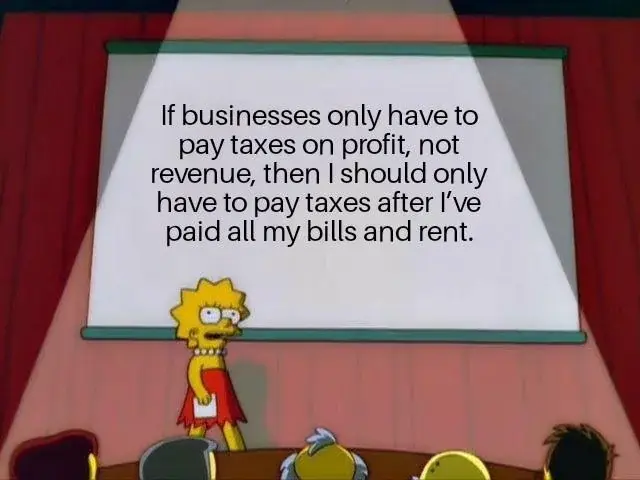
I’d say it would be nothing but a boon to the economy. Yes we’d lose a TON of tax revenue from the lower and middle class, but it would be more than made up for by the richest, who’s income is nearly entirely spending money, that they choose not to spend. (When not hidden in stocks or options or other assets).
The rich should pay more, but the rich could also hide their income by spending it – they’d also have the benefit of consultants and lawyers who could sniff out every loophole.
If the rich spent their income the global economy would be in MUCH better shape.
There aren’t as many rich people as you seem to think.
Yeah, it could possibly work if the “after bills” portion is super specific. Like rent/mortgage and utilities on primary residence Everything else is taxed. Would be hard to loophole that, but there’s a reason I’m not a lawyer.
It would be pretty easy for loopholes there. What’s a primary residence? Maybe your primary residence now contains a pub, or a co-working space, or a dance studio. Utilities are included? Well your electrical bill now supports a couple of for-profit electric car charging stations. That’s why they went with the standard deduction in the US.